
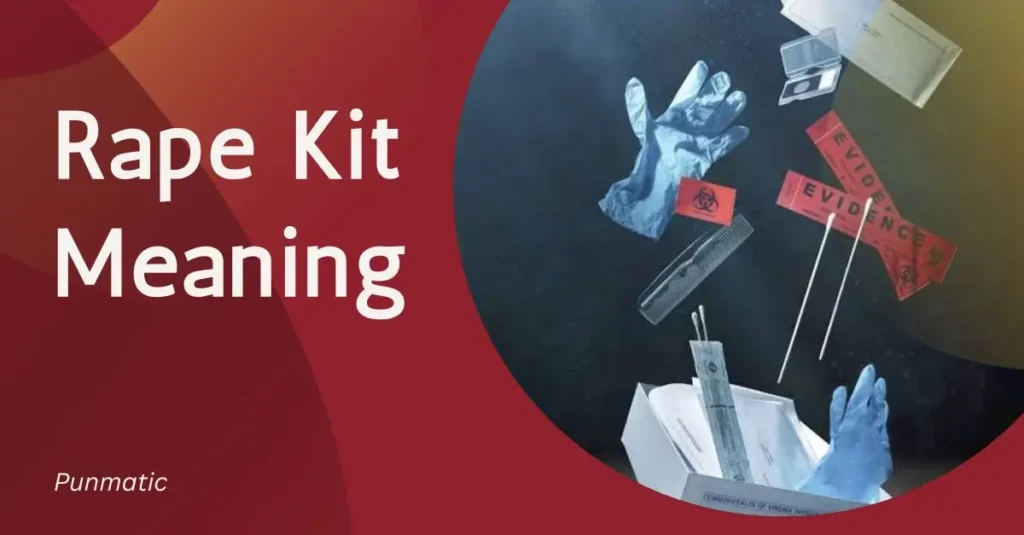
The term “rape kit” is commonly used to describe a sexual assault evidence collection kit used during a medical forensic examination after an alleged sexual assault.
A rape kit is not a single test and does not by itself determine whether a sexual assault occurred. It is a collection of materials and documentation used by trained medical professionals to collect and preserve potential forensic evidence. Official medical and justice organizations often use terms such as sexual assault kit (SAK), sexual assault evidence collection kit (SAEK), or sexual assault forensic examination (SAFE).
The purpose of the examination is broader than DNA collection. Depending on the circumstances and local procedures, healthcare professionals may provide medical care, document relevant findings, collect appropriate forensic evidence, and explain available support and follow-up options.
This article explains the rape kit meaning, what the term refers to, why it is used, who conducts the examination, what evidence may be collected, how the kit relates to DNA, what happens to the evidence afterward, and common questions about rape kits.
Table of Contents
What Does “Rape Kit” Mean?
A rape kit is a commonly used term for a sexual assault evidence collection kit.
It contains supplies and documentation that a trained healthcare professional may use during a sexual assault medical forensic examination to collect and preserve potential evidence.
The National Institute of Justice describes a sexual assault kit as a collection of forensic evidence gathered from a patient during a medical examination. The exact contents can vary depending on the jurisdiction and circumstances of the assault.
Simple definition
Rape kit = a collection kit used by trained medical professionals to collect and preserve possible forensic evidence after sexual assault.
The phrase “rape kit” is widely recognized, but many organizations prefer sexual assault kit because it is more precise and inclusive.
What Is a Sexual Assault Kit?
A sexual assault kit (SAK) is a set of materials used during a forensic medical examination.
Depending on local protocols and the circumstances, it can include items such as:
- Evidence collection materials
- Swabs
- Specimen containers
- Evidence envelopes
- Documentation forms
- Labels
- Instructions for the examiner
- Materials for preserving relevant physical evidence
The exact contents are not identical everywhere. Different jurisdictions and medical systems may use different versions of the kit.
This is important because a rape kit should not be thought of as one standardized box that is exactly the same in every country or hospital.
What Is the Purpose of a Rape Kit?
The primary purpose of a sexual assault kit is to help collect and preserve potential forensic evidence.
Evidence collected during a forensic examination may later contribute to:
- A police investigation
- Identification of a person
- Comparison of DNA evidence
- Confirmation or clarification of investigative information
- Criminal proceedings
- Exoneration of someone who was wrongly suspected
The National Institute of Justice notes that testing a sexual assault kit is only one part of a larger investigation. Other evidence and investigative information may also be important.
Does a Rape Kit Prove That a Sexual Assault Happened?
No.
A rape kit does not automatically prove that a sexual assault occurred.
The examination can document medical findings and preserve potential forensic evidence, but investigators and courts consider many different forms of information.
For example, an investigation may involve:
- Medical findings
- Forensic evidence
- Statements
- Witness information
- Digital evidence
- Clothing or other physical evidence
- Other information from the investigation
The U.S. Department of Justice notes that DNA evidence alone does not establish every aspect of what happened.
Therefore:
Rape kit ≠ automatic proof of a crime.
Instead, it is one potential source of evidence.
What Happens During a Sexual Assault Forensic Examination?
A sexual assault forensic examination is a medical examination conducted by a trained healthcare professional.
The exact process varies according to the patient’s circumstances, medical needs, local laws, and available services.
The U.S. Department of Justice describes a SAFE examination as involving medical history, a comprehensive examination, treatment of injuries, documentation, collection of appropriate samples, and referrals for additional support.
In general, the examination may involve:
1. Medical discussion
The healthcare professional discusses what happened from a medical and forensic perspective and determines what care or evidence collection may be appropriate.
2. Health assessment
The medical professional assesses the person’s health and any injuries or medical concerns.
3. Documentation
Relevant medical findings can be documented.
4. Evidence collection
Appropriate forensic samples or other evidence may be collected using the sexual assault evidence kit.
5. Medical care
The person may receive appropriate treatment and information about follow-up care.
6. Support and referrals
Depending on the location and service, advocates or other support professionals may be available.
The goal is to balance medical care, the person’s wellbeing, and appropriate evidence preservation.
Who Performs a Rape Kit Examination?
A sexual assault forensic examination is ideally conducted by a healthcare professional with specialized training.
In the United States, a specially trained Sexual Assault Nurse Examiner (SANE) may conduct the examination. Other qualified healthcare professionals may also perform examinations depending on local systems and availability.
A SANE is trained to understand both:
- Medical needs
- Forensic evidence procedures
This specialized training helps ensure that evidence is collected appropriately while the patient’s medical and emotional needs are also considered.
What Kind of Evidence Can a Rape Kit Collect?
The evidence collected depends on the circumstances of the incident.
Potential evidence can include biological or physical material that may help an investigation.
For example, official sources describe collection materials that may be used for:
- DNA-related evidence
- Biological samples
- Hair or fibers
- Other physical evidence
- Clothing or relevant items
The National Institute of Justice emphasizes that the evidence collected varies from case to case.
A kit does not necessarily contain or collect every possible type of evidence from an incident.
Other evidence may exist outside the kit, such as relevant items from a location where the incident occurred.
Does a Rape Kit Collect DNA?
It can.
One important purpose of a sexual assault evidence kit is to preserve biological evidence that may contain DNA.
Depending on the circumstances, forensic laboratories may examine collected samples for DNA or other useful evidence.
However, there is no guarantee that a kit will produce a usable DNA profile.
The National Institute of Justice explains that evidence may sometimes contain insufficient biological material for DNA analysis, and an investigation can still rely on other evidence.
So:
Rape kit → possible forensic evidence → possible DNA analysis
But:
Rape kit ≠ guaranteed DNA result.
Why Might a DNA Test Not Produce a Result?
There are several possible reasons.
For example:
- There may not be enough biological material.
- The relevant material may not contain usable DNA.
- The evidence may not produce a suitable profile.
- The available evidence may not be sufficient for comparison.
- The circumstances may not result in recoverable biological evidence.
This is why the absence of a DNA result does not automatically answer what happened.
A forensic investigation normally considers the complete body of available evidence.
Is a Rape Kit the Same as a Medical Exam?
Not exactly.
A sexual assault forensic examination is the broader medical and forensic process.
The sexual assault kit is the collection of materials used to preserve certain evidence during that process.
A simple way to remember the difference is:
SAFE = the examination
SAK = the evidence collection kit
“Rape kit” = common informal term for the evidence collection kit
The U.S. Department of Justice specifically distinguishes the forensic examination from the evidence collection kit.
Explore What Does Mean Absolute Deviation Mean with a simple explanation. What Does Mean Absolute Deviation Mean?
Rape Kit vs. Sexual Assault Forensic Examination
| Term | Meaning |
| Rape kit | Common informal term for a sexual assault evidence collection kit |
| Sexual assault kit | Evidence collection materials used during a forensic examination |
| SAK | Abbreviation for Sexual Assault Kit |
| SAEK | Sexual Assault Evidence Collection Kit |
| SAFE | Sexual Assault Forensic Examination |
| SANE | Sexual Assault Nurse Examiner |
These terms are related but are not interchangeable in every context.
Why Do Medical Professionals Use a Rape Kit?
The kit helps make forensic evidence collection more organized and consistent.
A standardized kit may contain:
- Collection supplies
- Evidence packaging
- Documentation
- Labels
- Instructions
- Other materials required by the local protocol
The American College of Obstetricians and Gynecologists explains that sexual assault evidence collection kits typically contain checklists, specimen-collection materials, documents, and instructions.
What Happens to the Evidence After Collection?
After evidence is collected, it generally needs to be properly documented, packaged, stored, and transferred according to local procedures.
This is important because evidence must be protected from contamination, loss, or unauthorized handling.
The process of documenting who handles evidence and when is commonly known as the chain of custody.
The American College of Obstetricians and Gynecologists notes that evidence handling procedures include packaging, labeling, sealing, transfer, storage, and chain-of-custody documentation.
What Is the Chain of Custody?
Chain of custody refers to the documented history of evidence.
It helps establish:
- Who collected it
- Who received it
- Where it was stored
- Who transferred it
- When it was transferred
- Whether proper procedures were followed
Maintaining a reliable chain of custody helps preserve the evidentiary value of forensic material
Are All Rape Kits the Same?
No.
The contents and procedures can differ between:
- Countries
- States or provinces
- Hospitals
- Police agencies
- Medical systems
- Laboratories
The National Institute of Justice specifically states that the contents of sexual assault kits vary by jurisdiction and circumstances.
Therefore, information about one country’s rape-kit procedure should not automatically be assumed to apply everywhere else.
Rape Kit Meaning in Simple English
If you need a very short definition:
A rape kit is a collection of medical and forensic supplies used to collect and preserve possible evidence after sexual assault.
The more formal term is usually:
Sexual assault evidence collection kit.
Learn another common abbreviation with What Does OTD Mean. What Does OTD Mean in Text? Slang, TikTok, Snapchat & Instagram
Why Is the Term “Sexual Assault Kit” Preferred?
The word “rape” describes a specific form of sexual violence, while sexual assault is a broader term.
A forensic evidence kit may be used in situations involving different forms of sexual assault.
For that reason, medical and justice organizations frequently use terminology such as:
Sexual Assault Kit (SAK)
or
Sexual Assault Evidence Collection Kit (SAEK).
The terminology also keeps the focus on the medical and forensic purpose of the kit.
Rape Kit Meaning in Medical Context
In a medical context, rape kit usually refers to the forensic evidence collection materials used during a sexual assault medical forensic examination.
The medical examination itself can address more than evidence.
According to the U.S. Department of Justice, a SAFE exam can include:
- Medical history
- Examination
- Treatment of injuries
- Documentation
- Evidence collection
- Referrals and follow-up care
Thus, the kit is only one part of a larger healthcare and forensic process.
Rape Kit Meaning in Legal Context
In legal or criminal-justice discussions, a rape kit is often discussed as a source of potential physical or biological evidence.
Evidence from a kit may contribute to:
- Investigations
- DNA comparisons
- Identification
- Corroboration of information
- Prosecution
- Exoneration
However, the evidentiary significance depends on the circumstances and applicable law.
The National Institute of Justice emphasizes that sexual assault kit testing is only one component of a broader investigation.
Does Every Sexual Assault Result in a Rape Kit?
No.
Whether a forensic examination is performed depends on many factors, including:
- The person’s choices
- Medical circumstances
- Timing
- Local policies
- Availability of trained professionals
- Applicable laws and procedures
A person may also seek medical care even when they are uncertain about reporting an incident to law enforcement.
Policies regarding evidence collection and reporting options vary by jurisdiction.
Does a Rape Kit Automatically Mean the Police Are Involved?
Not necessarily in every jurisdiction.
The relationship between medical forensic examinations, evidence storage, and law enforcement depends on local laws and procedures.
Some systems allow certain evidence to be collected or preserved while a person considers their reporting options.
The U.S. Department of Justice notes that jurisdictions can have different approaches to the handling and submission of sexual assault kits.
Therefore, anyone needing current information should ask a qualified healthcare professional or appropriate local service about the rules where they live.
Rape Kit Meaning in Bangladesh
In Bangladesh, forensic medical examinations can play an important role in cases involving rape and sexual assault.
Information published for Bangladesh indicates that some government medical college hospitals have One Stop Crisis Centres (OCCs) that can provide healthcare, police assistance, psychological counseling, and related support.
The exact availability of forensic examination services varies by location and facility.
Because medical and legal procedures can change, people in Bangladesh should seek current guidance from a qualified medical professional or appropriate local authority rather than relying only on general information found online.
What Is a SAFE Exam?
SAFE stands for:
Sexual Assault Forensic Examination
It is a medical forensic examination for someone who has experienced sexual assault.
The U.S. Department of Justice describes SAFE examinations as involving medical assessment, documentation, treatment, evidence collection, and referrals or follow-up support as appropriate.
SAFE vs. SAK
SAFE: The examination
SAK: The kit used to collect certain evidence
This distinction is useful when reading medical or legal information.
What Is a SANE?
SANE stands for:
Sexual Assault Nurse Examiner
A SANE is a nurse who has specialized training in caring for patients after sexual assault and conducting forensic examinations.
SANEs may be trained in:
- Trauma-informed care
- Medical assessment
- Forensic documentation
- Evidence collection
- Evidence preservation
- Patient support
The National Institute of Justice identifies specially trained Sexual Assault Nurse Examiners as professionals who may conduct sexual assault forensic examinations.
What Does “Rape Kit Evidence” Mean?
Rape kit evidence refers to forensic evidence collected as part of a sexual assault evidence collection process.
It may include biological or physical evidence that could potentially help an investigation.
However, it is important not to assume that every kit contains the same evidence.
The type and amount of evidence depend on the circumstances and the applicable medical protocol.
Does a Rape Kit Always Find DNA?
No.
A sexual assault kit can contain evidence that does not result in a usable DNA profile.
There may also be cases where no biological evidence suitable for DNA analysis is identified.
The National Institute of Justice notes that DNA testing does not always produce a new investigative lead.
An investigation can therefore continue using other forms of evidence.
Does a Negative DNA Result Mean Nothing Happened?
No.
A DNA result and the question of whether an assault occurred are not the same thing.
DNA is only one type of forensic evidence.
Investigators may consider many other sources of information, depending on the case.
The absence of a usable DNA profile does not by itself establish that an assault did or did not occur.
Is a Rape Kit Only About DNA?
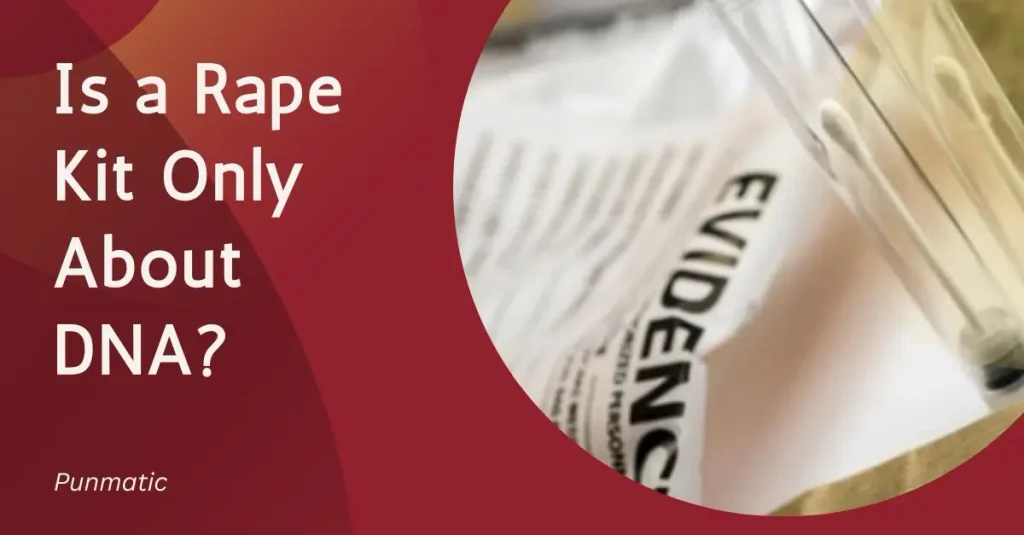
No.
Although DNA is an important reason for collecting certain forensic samples, a sexual assault forensic examination can involve other forms of documentation and evidence.
The National Institute of Justice explains that evidence can include different biological and physical materials, depending on the circumstances.
The broader examination can also address medical concerns and document relevant findings.
Rape Kit vs. DNA Test
These are not the same thing.
| Rape Kit | DNA Test |
| Collection and preservation materials | Laboratory analysis |
| Used during forensic examination | May be performed later |
| Can contain different types of evidence | Focuses on genetic material |
| Does not automatically produce a DNA result | Analyzes a biological sample |
| Part of a broader forensic process | One possible forensic analysis |
A rape kit may provide samples that are later examined for DNA.
Rape Kit vs. Regular Medical Examination
A regular medical examination primarily focuses on a person’s health.
A sexual assault forensic examination has an additional forensic purpose.
It may involve:
- Medical assessment
- Documentation
- Evidence collection
- Evidence preservation
- Appropriate treatment
- Follow-up and referrals
The Department of Justice describes SAFE examinations as combining medical and forensic considerations.
Why Is Evidence Preservation Important?
Forensic evidence can become less useful if it is improperly handled, contaminated, lost, or stored incorrectly.
That is why professional protocols address:
- Collection
- Packaging
- Labeling
- Sealing
- Storage
- Transfer
- Documentation
These procedures help protect evidence integrity and establish chain of custody.
Can Other Evidence Be Important Besides a Rape Kit?
Yes.
A sexual assault investigation may involve evidence outside the kit.
Depending on the circumstances, investigators may consider:
- Relevant clothing
- Items from a location
- Witness information
- Digital evidence
- Medical records
- Statements
- Other forensic evidence
The National Institute of Justice specifically notes that evidence from a sexual assault kit is not necessarily all the evidence relevant to a case.
Common Misconceptions About Rape Kits
Myth 1: A rape kit proves a rape occurred
False.
A rape kit collects and preserves potential evidence. It does not by itself determine what happened.
Myth 2: Every rape kit produces DNA
False.
A kit may not contain enough suitable biological material to produce a usable DNA profile.
Myth 3: Every kit is identical
False.
Kit contents and procedures vary by jurisdiction and circumstances.
Myth 4: A rape kit is the same thing as a DNA test
False.
The kit is used for evidence collection; DNA testing is a possible later laboratory analysis.
Myth 5: A rape kit is the entire investigation
False.
It is only one potential source of evidence.
Myth 6: The term always refers to the entire medical examination
Not exactly.
“Rape kit” usually refers to the evidence collection kit, while SAFE refers to the broader forensic examination.
Important Terms Related to Rape Kits
Understanding these terms makes medical and legal articles easier to read.
Sexual Assault Kit (SAK)
A kit used to collect and preserve potential forensic evidence.
Sexual Assault Evidence Collection Kit (SAEK)
A more formal name for the evidence collection kit.
Sexual Assault Forensic Examination (SAFE)
The medical forensic examination performed after sexual assault.
Sexual Assault Nurse Examiner (SANE)
A specially trained nurse who may conduct a forensic examination.
Forensic Evidence
Evidence that may be examined scientifically in connection with an investigation.
DNA
Genetic material that can sometimes help identify or compare individuals.
Chain of Custody
Documentation showing how evidence was collected, handled, transferred, and stored.
Rape Kit Meaning: Quick Comparison
| Term | Meaning |
| Rape kit | Common term for a sexual assault evidence kit |
| Sexual assault kit | Collection of materials used to preserve forensic evidence |
| SAFE | Sexual Assault Forensic Examination |
| SANE | Sexual Assault Nurse Examiner |
| DNA evidence | Genetic evidence that may be analyzed |
| Forensic evidence | Evidence examined using scientific methods |
| Chain of custody | Documentation of evidence handling |
Why Is the Topic Important?
Understanding what a rape kit means can help people understand news reports, medical information, and criminal justice discussions.
The phrase is frequently used in media coverage of sexual assault cases, but it is sometimes used inaccurately.
The most important point is:
A rape kit is an evidence-collection tool, not a test that independently proves a crime.
It forms part of a broader medical and forensic process.
Rape Kit Meaning in One Sentence
A rape kit is a sexual assault evidence collection kit used by trained medical professionals to collect and preserve potential forensic evidence during a sexual assault forensic examination.
Frequently Asked Questions
What does rape kit mean?
A rape kit is a common term for a sexual assault evidence collection kit used to collect and preserve potential forensic evidence.
What is another name for a rape kit?
Common formal terms include sexual assault kit, sexual assault evidence collection kit, and SAEK.
What is a SAFE exam?
SAFE means Sexual Assault Forensic Examination, a medical examination that can include medical care, documentation, and forensic evidence collection.
What does SANE stand for?
SANE stands for Sexual Assault Nurse Examiner.
Does a rape kit contain DNA?
It can contain biological samples that may later be tested for DNA, but a usable DNA profile is not guaranteed.
Does a rape kit prove sexual assault?
No, a rape kit provides potential evidence and does not independently prove that a sexual assault occurred.
Is a rape kit the same as a DNA test?
No, the kit collects evidence while a DNA test is a laboratory analysis that may be performed on an appropriate sample.
Are all rape kits the same?
No, their contents and procedures vary according to jurisdiction and circumstances.
Conclusion
The rape kit meaning is straightforward: it is a common term for a sexual assault evidence collection kit used during a medical forensic examination.
The kit helps trained healthcare professionals collect and preserve potential forensic evidence. Depending on the circumstances, evidence may later be examined for DNA or other forensic information.
However, a rape kit should not be confused with a DNA test or treated as automatic proof that a crime occurred. It is one component of a broader investigation that can include medical findings, forensic evidence, statements, witnesses, digital information, and other relevant evidence.
The broader examination, known as a Sexual Assault Forensic Examination (SAFE), also focuses on the person’s medical needs, documentation, appropriate treatment, and access to support.
In short:
Rape kit = sexual assault evidence collection kit
SAFE = the broader medical forensic examination
SANE = specially trained medical professional who may conduct the examination
Understanding these distinctions makes the term much easier to interpret when it appears in medical, legal, or news contexts.


